
Residential cleaning
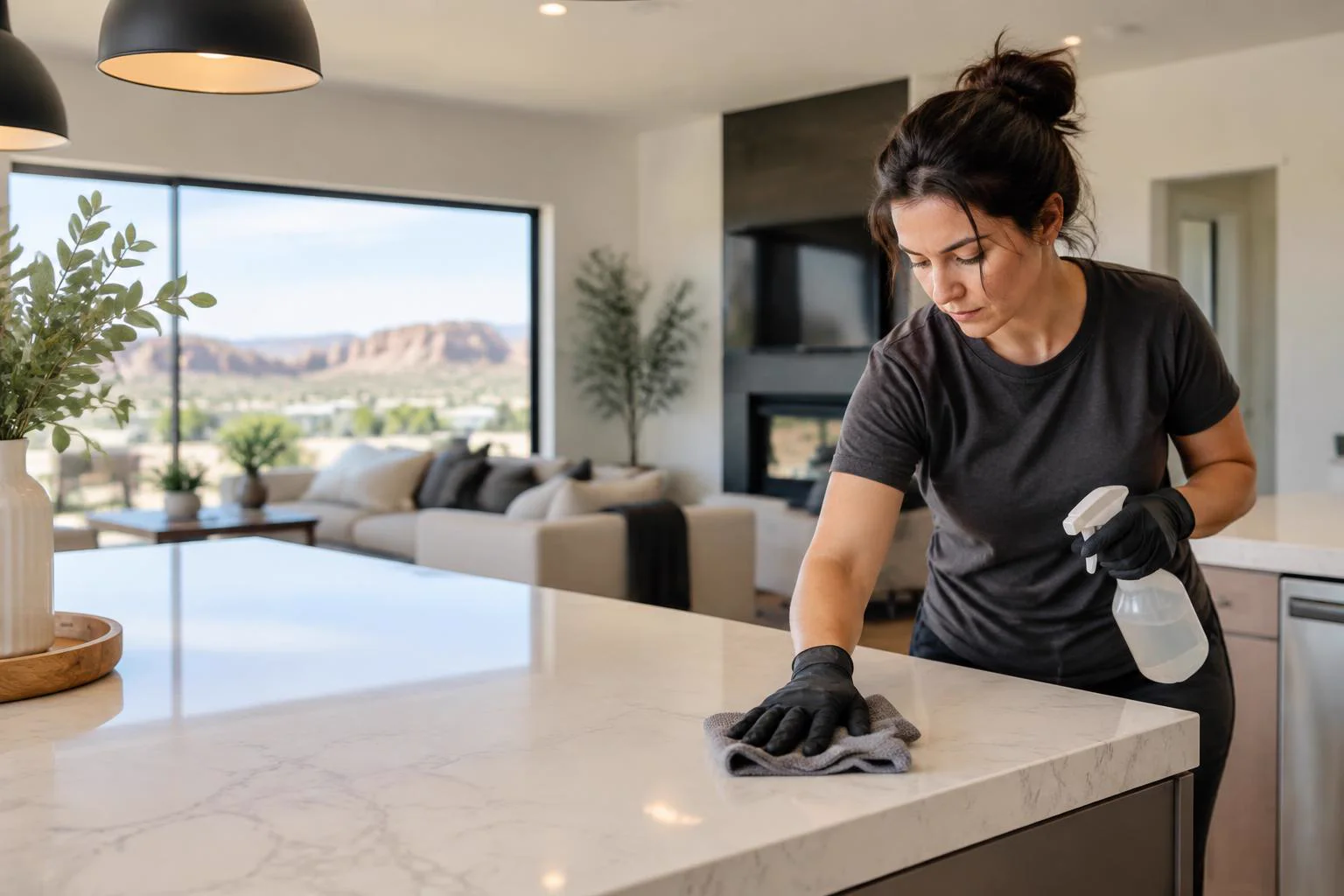
House cleaners and maid services need classifications that reflect occupied homes, customer belongings, keys, pets, and the surfaces being cleaned.
Utah small business coverage
Practical coverage guidance for residential house cleaners, maid services, janitorial companies, and small commercial cleaning crews throughout Utah — from a local St. George agency that understands service businesses.
Utah cleaning business insurance usually starts with general liability, then may add equipment, bond, commercial auto, or workers’ compensation coverage. Many small Utah cleaning companies are quoted roughly $450 to $1,400 a year for general liability, though residential and janitorial operations classify differently and final pricing depends on underwriting.
OnPoint reviews the work you actually perform before discussing options. Tell us whether you clean homes, vacation rentals, offices, medical spaces, construction sites, or specialty surfaces, and whether employees or subcontractors enter customer premises.
Reviewed by Kip LeeLicensed UT / NV / AZ agent since 2005Last updated
A practical starting point
House cleaners and maid services need classifications that reflect occupied homes, customer belongings, keys, pets, and the surfaces being cleaned.
Office, retail, and facility contracts may call for higher limits, additional-insured endorsements, bonds, workers’ compensation, or proof of auto coverage.
We ask about chemicals, floor work, heights, employees, subcontractors, and vehicles so the application describes the operation accurately.
Coverage checklist
Not every business needs every policy. The right combination depends on your services, contracts, employees, vehicles, property, and the insurer’s underwriting rules.
May respond to covered third-party injury or property-damage claims, subject to policy terms and exclusions.
May package liability with eligible business property and income coverage for qualifying cleaning operations.
May provide statutory benefits for covered employee injuries and can be required for Utah employers.
Designed for vehicles used in the business; personal auto policies may limit or exclude business use.
Can help insure vacuums, floor machines, and portable equipment away from a fixed location.
May address certain theft allegations or contract requirements, depending on the product and wording.
Budgeting context
Owners usually ask about price before anything else, so here is honest context rather than a single number. The ranges below reflect what small Utah cleaning businesses are commonly quoted. They are educational estimates, not offers, and a business with employees, heavy floor work, or prior claims can land outside them.
| Coverage | General annual range | What moves the number |
|---|---|---|
| General liability (solo house cleaner) | Often about $450 – $900 per year | Annual receipts, services performed, chemicals, and chosen limits. |
| General liability (small janitorial crew) | Often about $900 – $2,400 per year | Payroll, building types, night access, contract limits, and floor or height work. |
| Business owners policy (liability + property) | Often about $700 – $2,000 per year | Equipment values, storage location, business income needs, and eligibility. |
| Workers’ compensation | Commonly rated per $100 of payroll | Class code, payroll, claims history, and experience modifier. |
| Commercial auto (one van) | Often about $1,400 – $3,200 per year | Driving records, radius, vehicle value, and selected coverages. |
| Janitorial service bond | Often a few hundred dollars per year | Bond amount requested, number of employees, and the surety’s terms. |
These ranges are general educational estimates gathered from typical small-business submissions, not quotes, offers, or guarantees. Your premium depends on underwriting, and some businesses fall outside these ranges entirely.
Two different workdays
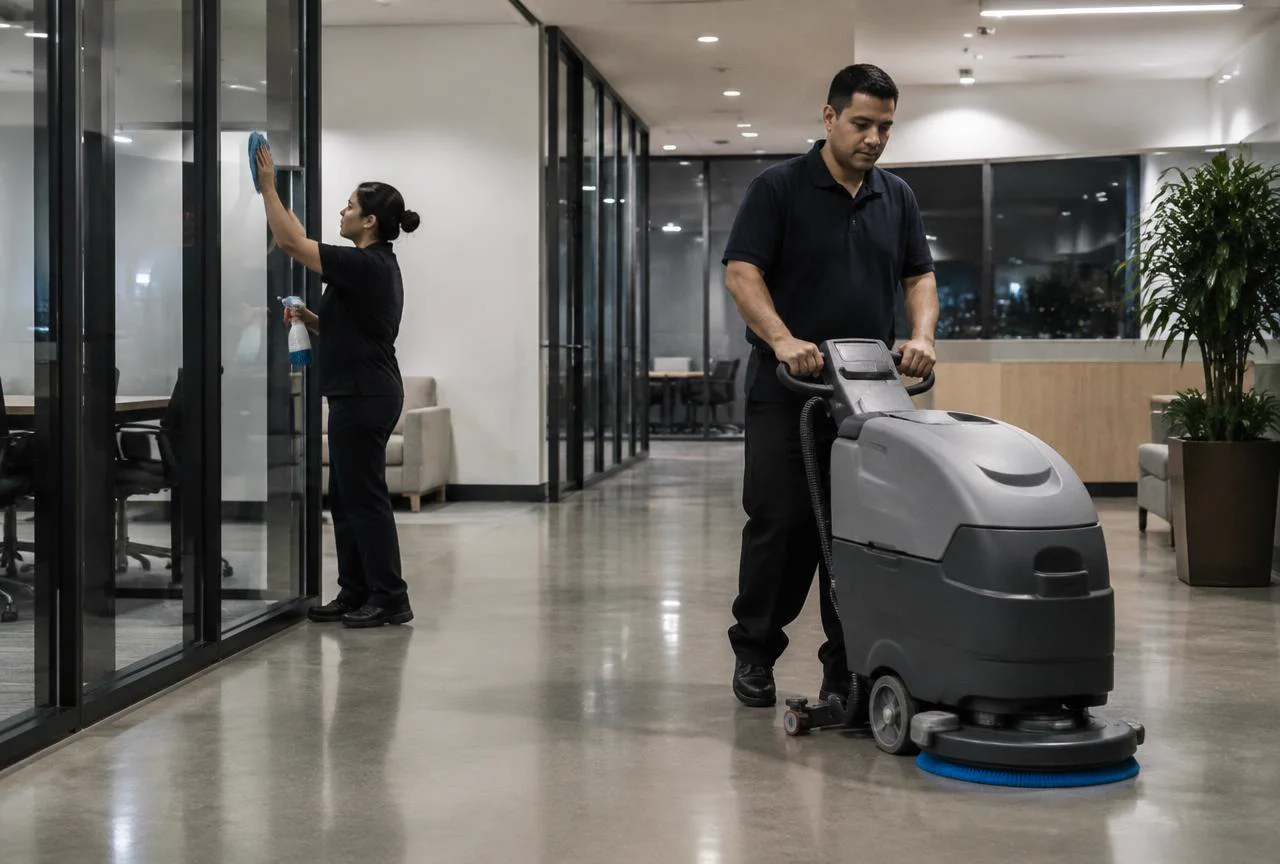
A cleaner moving through occupied homes encounters pets, fragile belongings, customer keys, stone counters, hardwood floors, and appliances. A commercial crew may work after hours around polished floors, security systems, tenant property, and contractually required limits. Those differences can affect classification, price, and available endorsements.
We have learned that the useful conversation is rarely just, “Do you clean?” It is what you clean, when you are there, who has access, what products and machines you use, and whether the customer contract shifts responsibility to your company.
Equipment and transportation
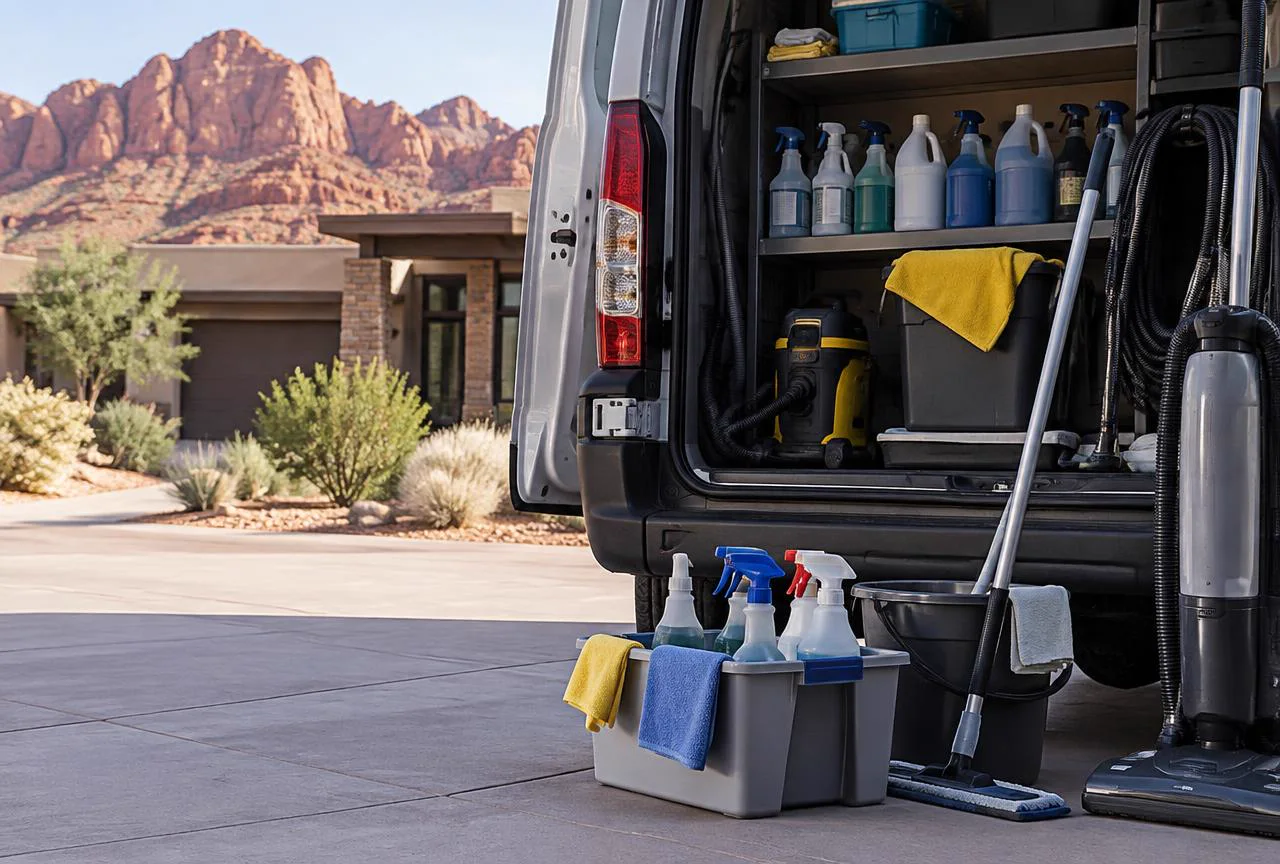
A general liability policy is not designed to insure everything a cleaner owns. Portable equipment may need inland marine or business property coverage. A vehicle titled to the business or regularly used for crews and supplies may need a commercial auto policy rather than a personal policy.
Keep an inventory with purchase records and photos. It makes a coverage review more accurate and may help document a loss. Chemical handling, carpet cleaning, pressure washing, and work above ordinary floor level should also be disclosed because not every insurer treats those services alike.
A local conversation
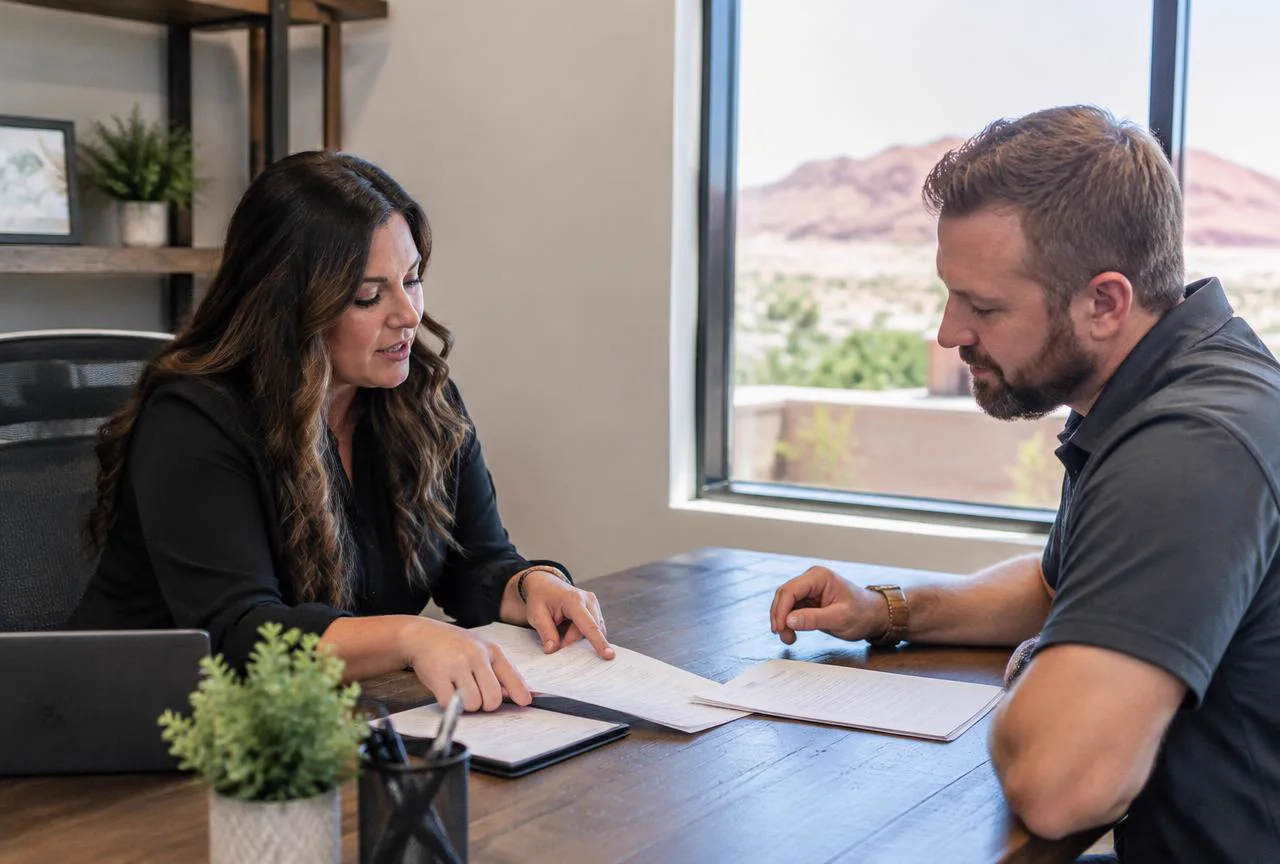
Some cleaning companies begin with one owner and a vacuum in the trunk. Others quickly add employees, a van, nightly office contracts, and customer requests for certificates. We enjoy working with these businesses because a short, careful conversation can often make the insurance application much clearer.
We will not tell you that one package fits every cleaner. Instead, we can review your current services, anticipated growth, and contract language, then explain the options available through the insurers we represent.
Situations to plan for
A cleaner uses the wrong product on natural stone. Whether the resulting damage is covered can depend on exclusions involving property being worked on or in the business’s care.
A wet floor in an office leads to an injury allegation. General liability may respond when the event meets the policy terms, limits, and conditions.
A worker strains a back moving equipment. Workers’ compensation may provide applicable benefits when the person and injury are covered under the policy and Utah law.
Examples are illustrative only. Whether a claim is covered depends on the facts, policy wording, limits, deductibles, exclusions, and endorsements in force at the time of loss.
Utah-focused, Southern Utah based
OnPoint is based in St. George and works with Utah businesses statewide. Southern Utah cleaners often move between homes, vacation rentals, offices, and construction sites across Washington and Iron Counties; northern Utah firms may face denser routes and larger commercial contracts. We account for the operation rather than forcing every cleaner into one template.
Notes from the desk
The call I get most often is from a house cleaner who just landed a property-management contract and was handed a certificate request with limits and additional-insured language they have never seen before. That request, not the cleaning itself, is usually what drives the policy design.
The second thing I see: owners underestimate equipment. A couple of commercial vacuums, a floor machine, and a carpet extractor add up faster than people expect, and a liability policy alone was never built to replace them.
I would rather spend fifteen minutes asking what you clean and who goes into the home than hand you a fast quote that gets corrected at audit. If your operation does not fit the insurers I work with, I will tell you that too.
Straight answers from a local agent. Have another question? Call us at (435) 628-0993.
Tell us what work you perform, who performs it, and where. We’ll discuss available Utah options without pressure.